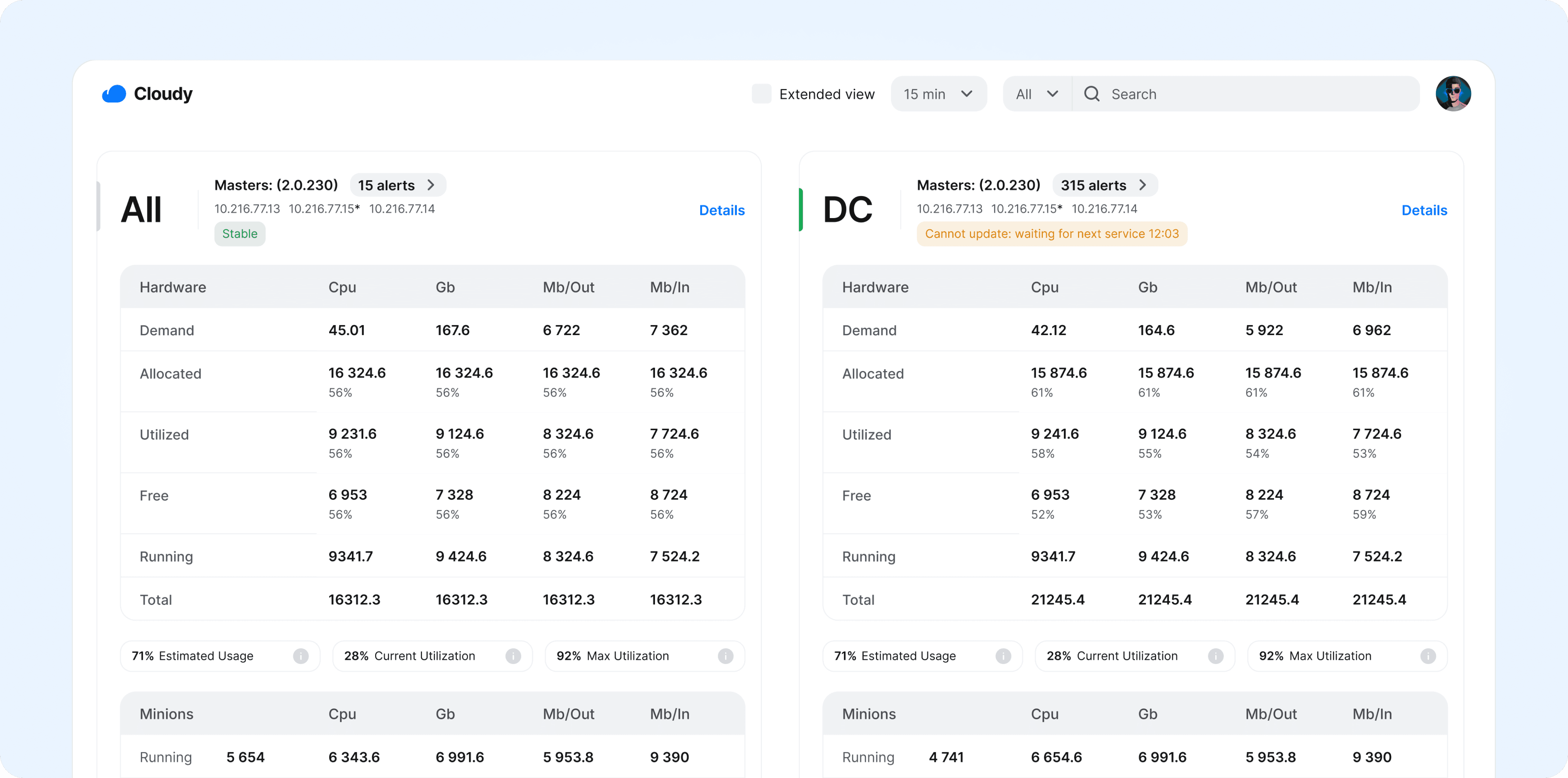
Cloud Admin Panel

Designed an internal cloud admin panel that helps infrastructure teams monitor data centers, track resource capacity, manage services, and investigate system alerts faster.
Designed a payment routing admin panel that helps operators manage rules,
monitor traffic, and reduce manual errors
in high-volume payment flows.

Project overview

Cloud is an internal infrastructure management platform for monitoring data centers, compute resources, services, instances, volumes, devices, and alerts.


The product gives infrastructure teams a single workspace to track system health, understand capacity, and quickly drill down into affected resources.

Challenge

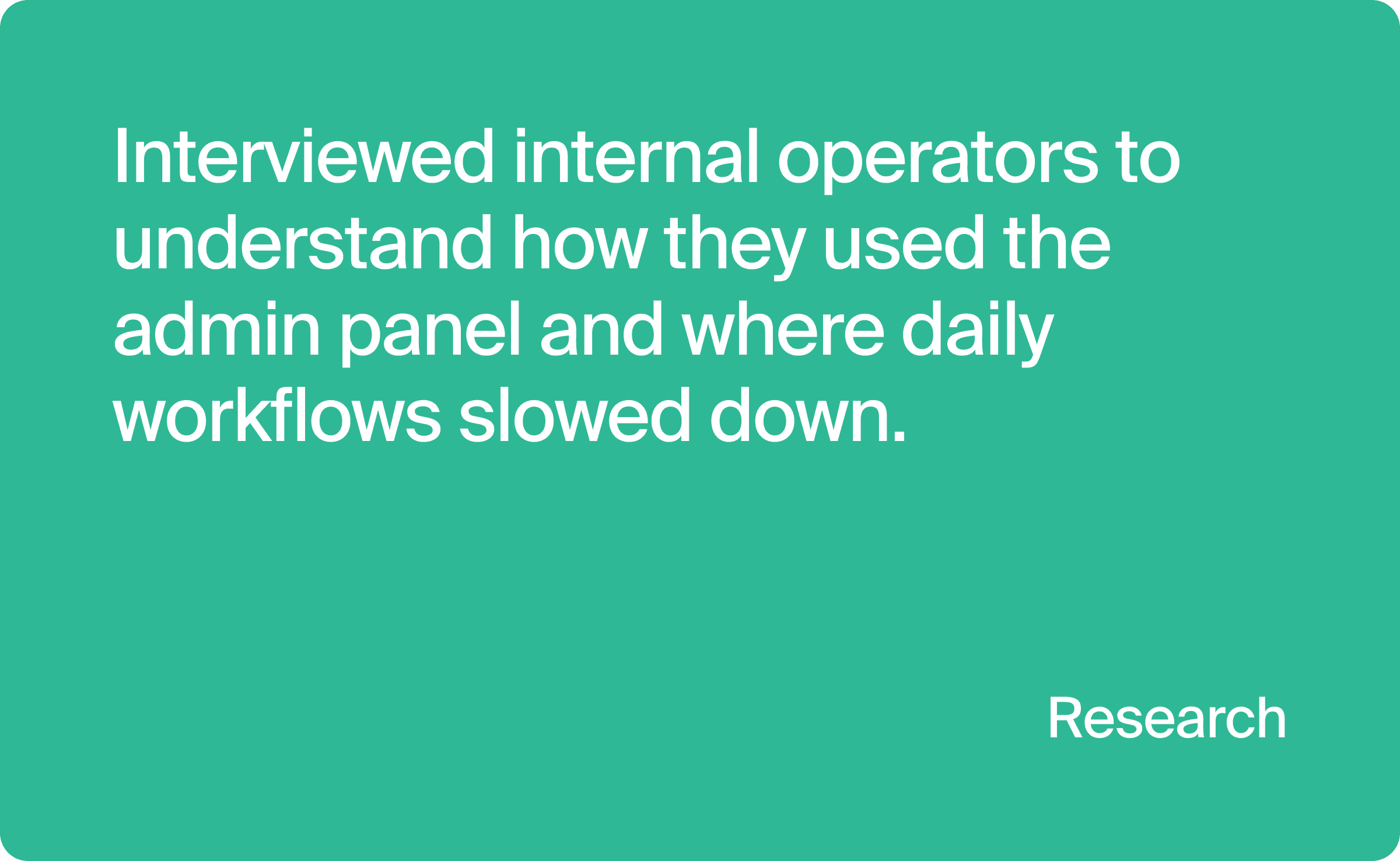
As infrastructure grew across multiple data centers, teams needed a faster way to understand system health, detect overload risks, and investigate issues without switching between separate tools.

The challenge was to turn dense technical data into a clear admin experience for monitoring capacity, alerts, services, and resource-level details.

Goals

We focused on making infrastructure status easier to understand, reducing manual checks, and helping teams act faster during incidents and capacity planning.

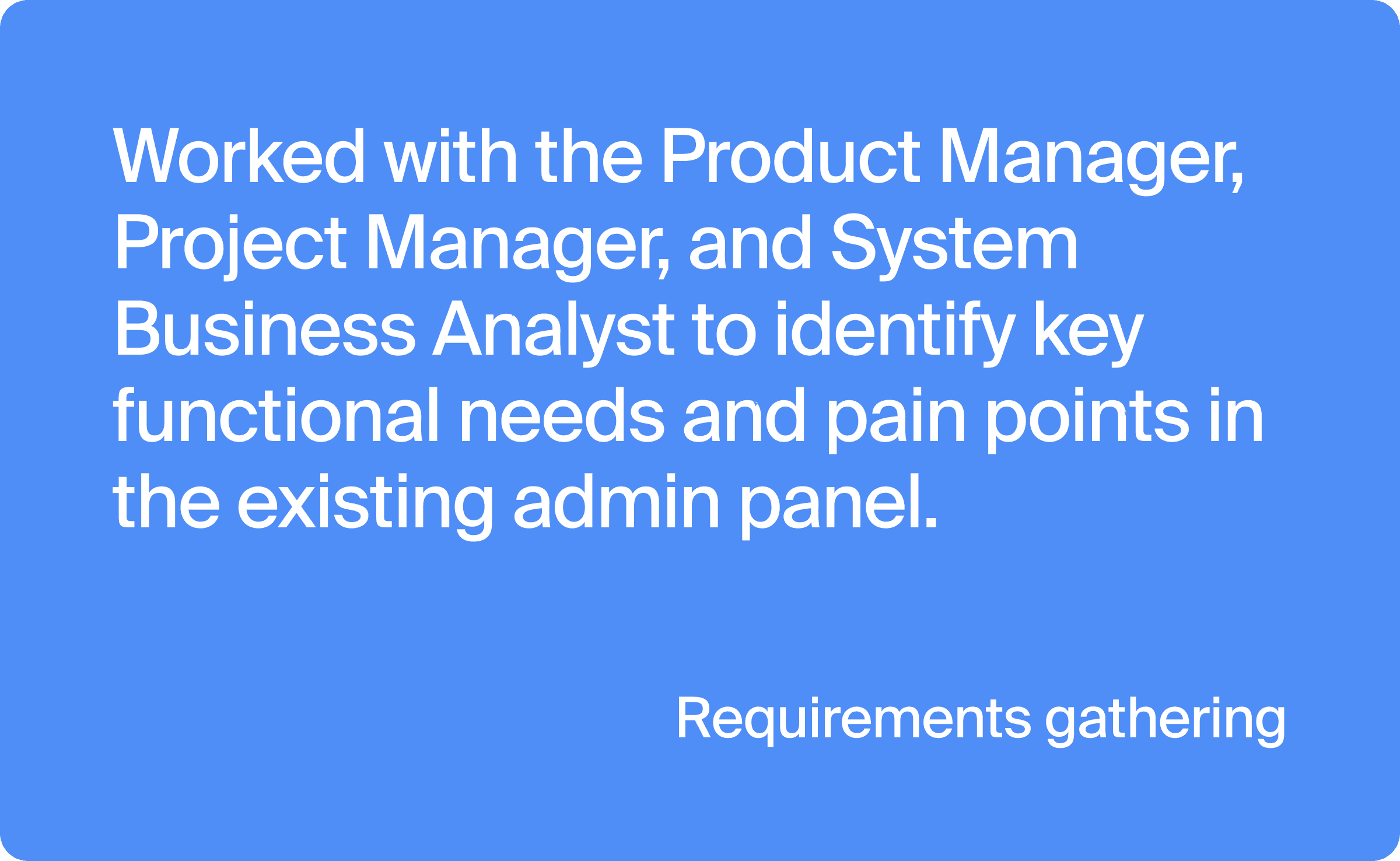
  • Help engineers spot overload
    risks and alerts faster.

    Operator Experience

  • Make resource details easier to find across data centers and instances.

    Operator Experience

  • Reduce cognitive load in dense infrastructure dashboards and tables.

    Operator Experience

  • Reduce time spent switching between monitoring tools and admin views.

    Business Efficiency

  • Support better capacity planning across multiple data centers.

    Business Efficiency

  • Help prevent downtime by making critical states visible earlier.

    Business Efficiency

  • Reduce time needed to locate affected resources during incidents.

    Success Metrics

  • Improve visibility of current, estimated, and peak resource usage.

    Success Metrics

  • Reduce manual status checks across services, instances, and storage.

    Success Metrics

  • Help engineers spot overload risks and alerts faster.

    Operator Experience

  • Make resource details easier
    to find across data
    centers and instances.

    Operator Experience

  • Reduce cognitive load
    in dense infrastructure
    dashboards and tables.

    Operator Experience

  • Reduce time spent switching between monitoring tools and admin views.

    Business Efficiency

  • Support better capacity planning across multiple data centers.

    Business Efficiency

  • Help prevent downtime by making critical states visible earlier.

    Business Efficiency

  • Reduce time needed to locate affected resources during incidents.

    Success Metrics

  • Improve visibility of current, estimated, and peak resource usage.

    Success Metrics

  • Reduce manual status checks across services, instances, and storage.

    Success Metrics

  • Card image
  • Card image
  • Card image
  • Card image
  • Card image
  • Card image

Constraints

Dense Operational Data

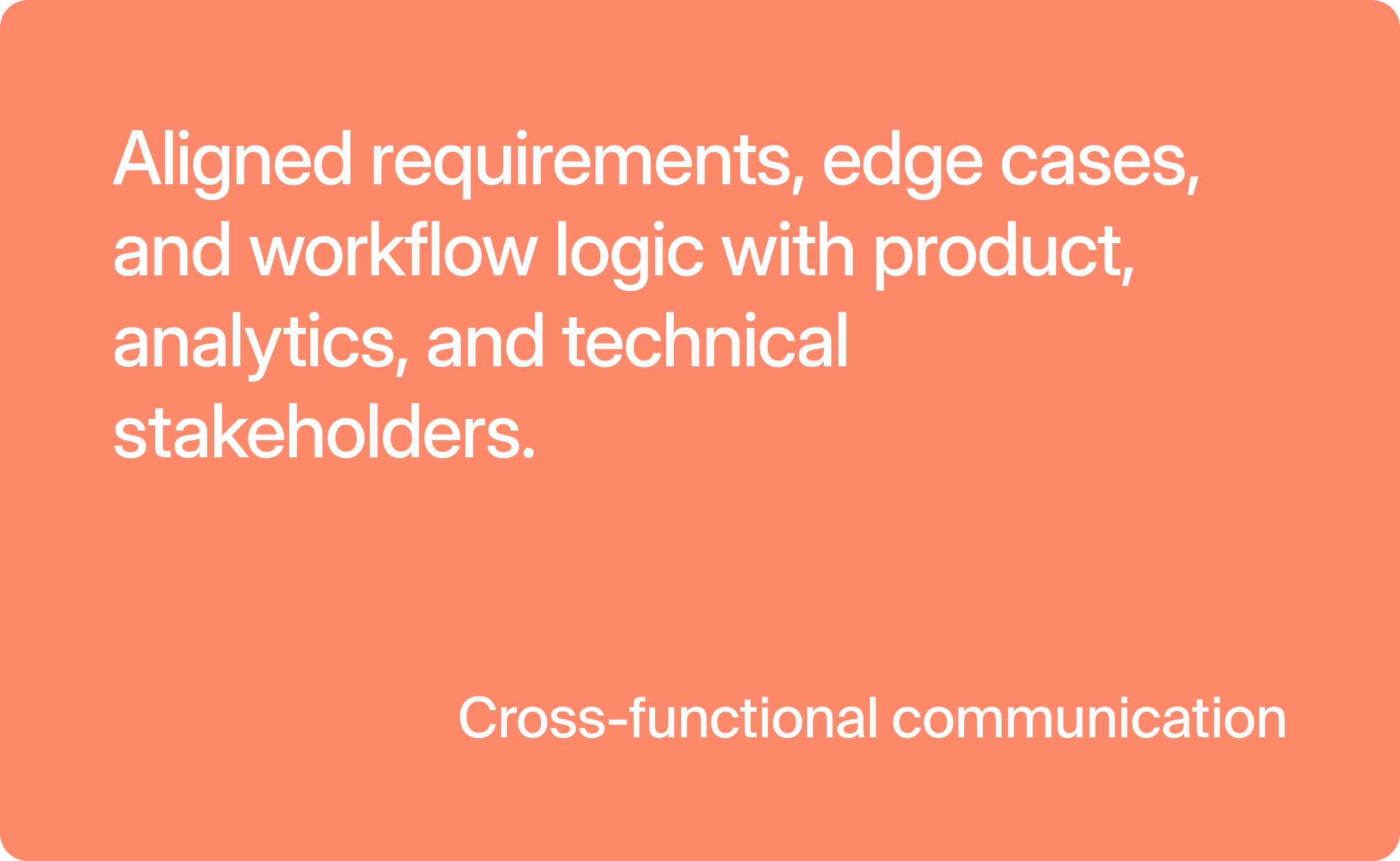
We needed to show many metrics, states, and resources without overwhelming users.

System Constraints

Solutions had to fit existing components, data structures, and technical limitations.

Limited Research Access

Due to NDA restrictions, research was based on internal insights and stakeholder feedback.

PrimeVue & BODS Constraints

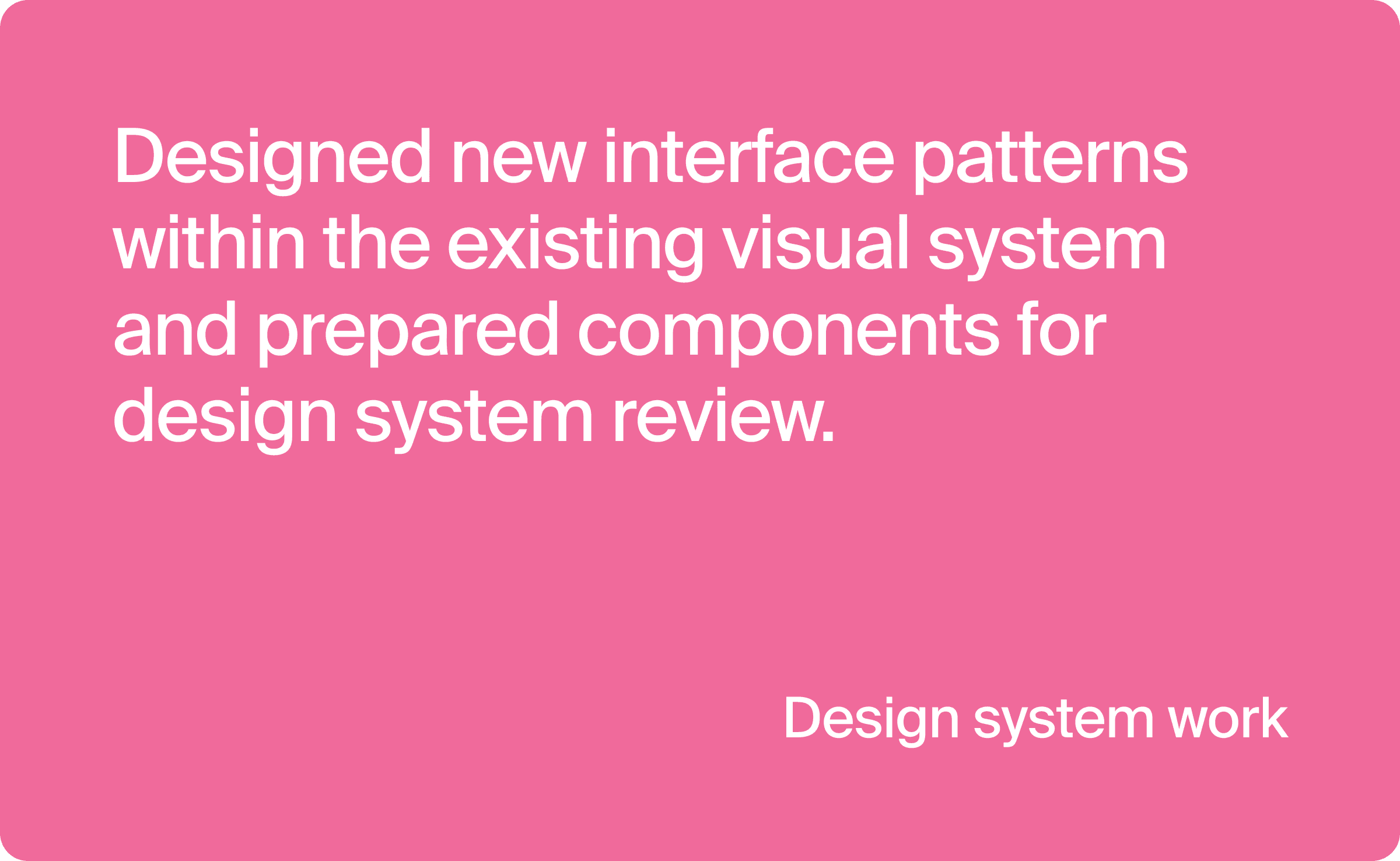
The interface had to stay aligned with existing components and system rules.

Key Insights

Key desicions

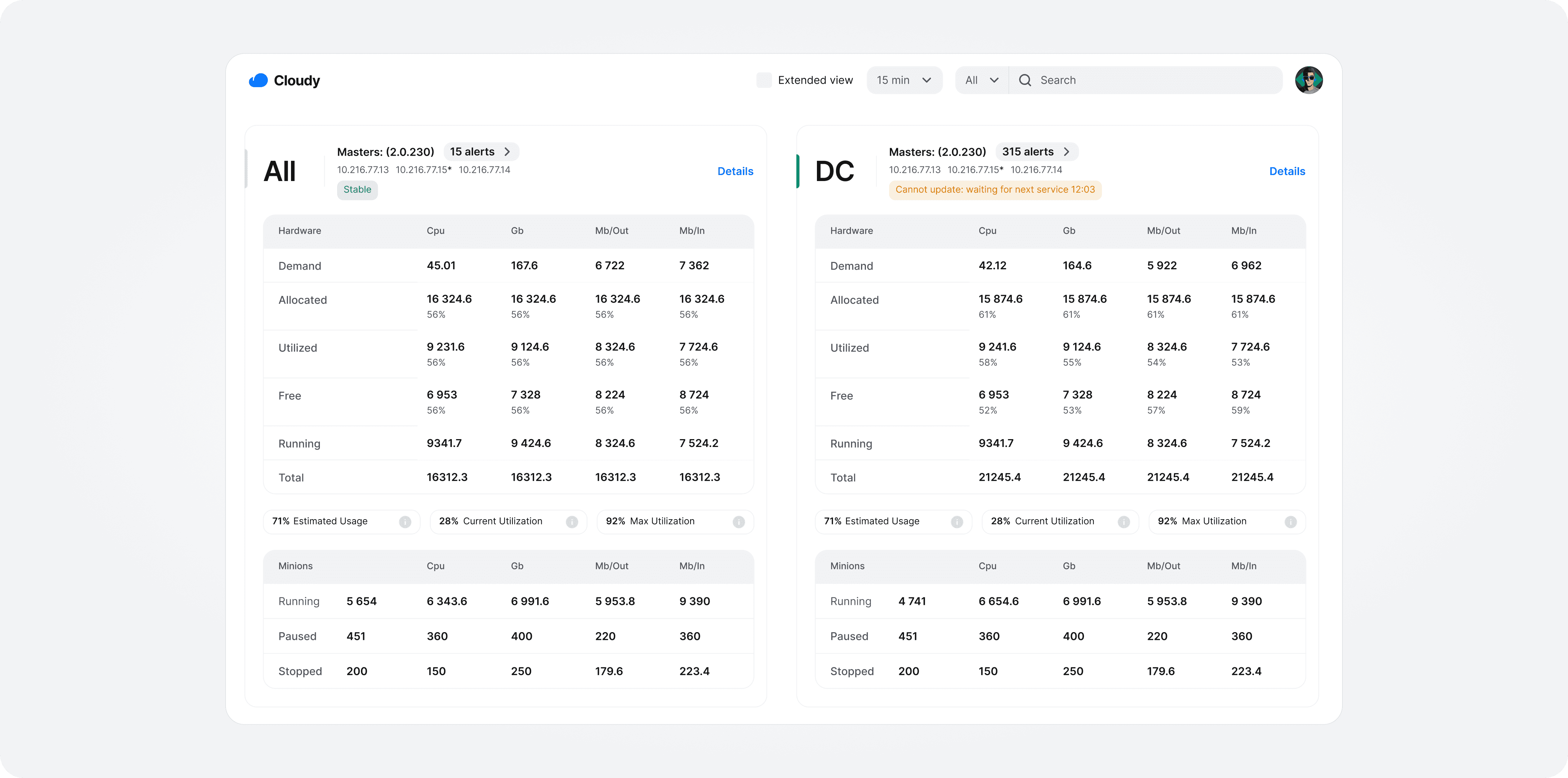
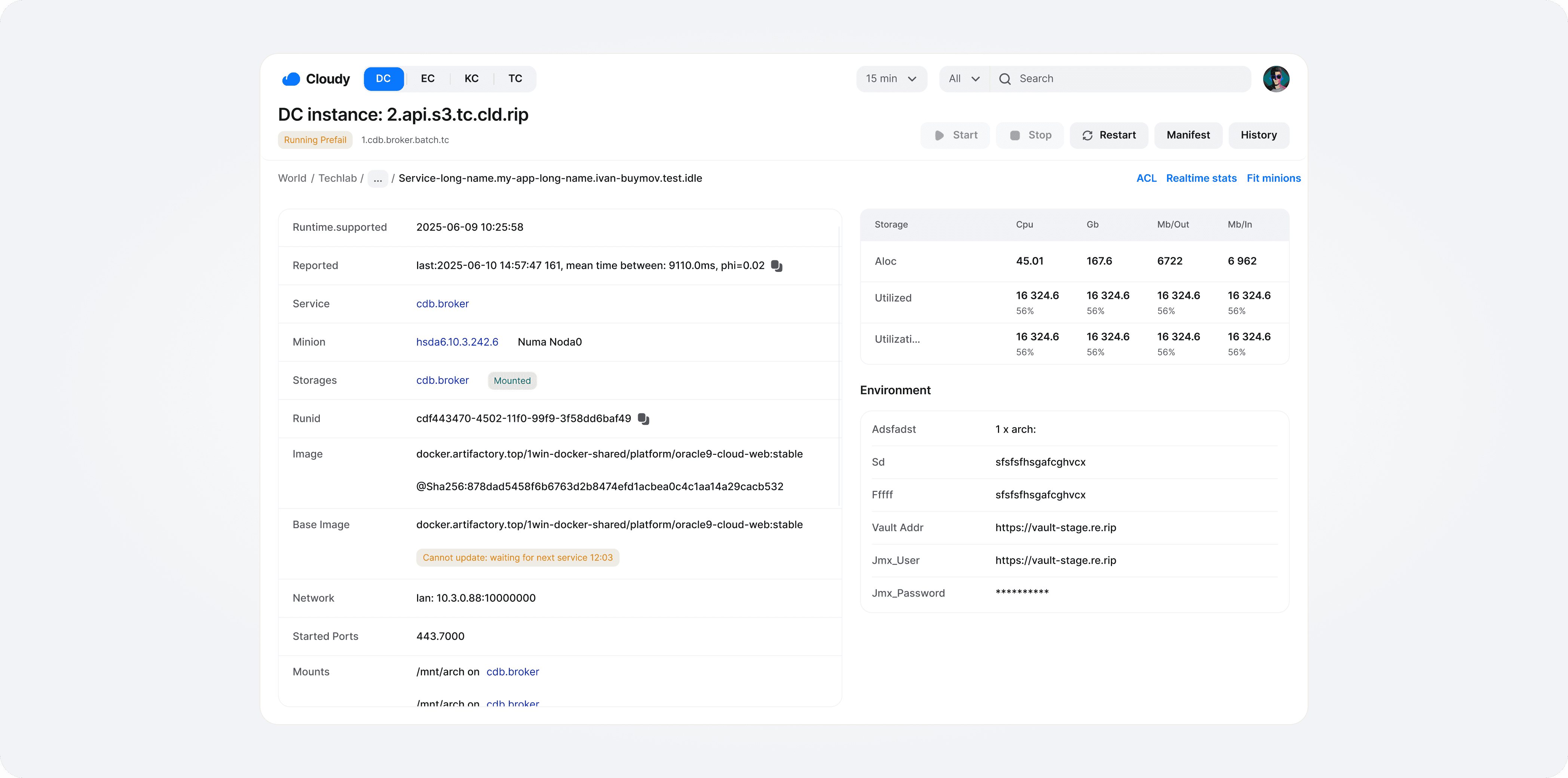
To make complex infrastructure easier to operate, I focused on two core interactions: monitoring capacity at a glance and drilling down into affected resources.

Engineers can scan data centers, spot overload risks, and open affected resources.

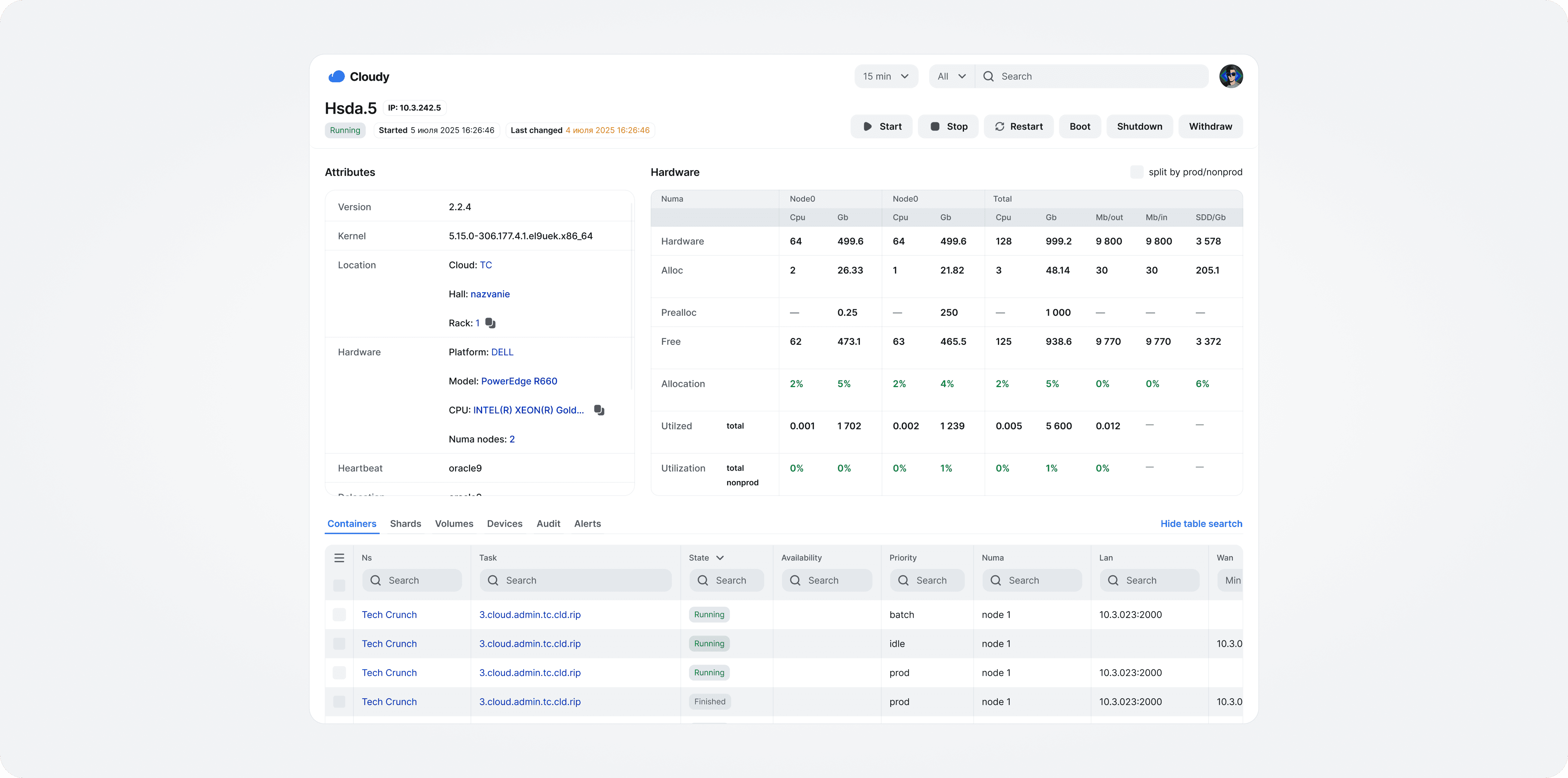
Engineers can search managed nodes, check their status, and run actions in context.

Final interface

The final design brings data centers, capacity, alerts, services, and resource-level controls into one workspace for infrastructure operations.
Impact

Based on employee interviews and internal feedback, the new admin panel helped teams investigate issues faster, reduce manual status checks, detect overload risks earlier, and review capacity with less effort.

Faster
issue investigation

+

+

+

10
10
10

%

%

%

Fewer manual
status checks

-

-

-

10
10
10

%

%

%

Faster
overload detection

-

-

-

10
10
10

%

%

%

Faster
capacity review

+

+

+

10
10
10

%

%

%